As endurance races of 100+ miles have become the norm, we felt like it was time to repost this old article from way back in 2014, when we were doing a 6-day MTB stage race. Back then a 200 mile gravel race still felt a little wild, not something most people would consider. Fast forward to today and now the 200 mile Unbound race (and similar) seem like a normal thing that cyclists (or runners!) take on. As we tackle bigger and bigger events, as endurance athletes, we need to think about how this affects the number of races/big events or challenges we can do and how long it takes to recover back to baseline.
How Often Can You Do Epic Stuff?
The length of time it takes to recover completely from efforts is an important concept that endurance athletes do not give enough attention. After completing the Trans-Sylvania Epic in 2014 I was faced with another opportunity to be patient. After seven stages that lasted 2-4 hours of hard mountain biking combined with sleeping in a tent I was tired and beat up. Then pretty much everyone got a food born illness! I had a lot of recovering to do.
While it was tempting to get back to training and racing by that next there was a reality that exceeding my normal training volume and intensity while also accumulating sleep dept and experiencing a significant illness required extended recovery time.
Just how fatigued we are after big adventures and how long it will take to recover is variable and difficult to pinpoint but there are some best practices and some great signs that help you make decisions more confidently.

Book a phone consult to discuss your recovery!
How to Quantify the Level of Fatigue?
The simplest way to look at fatigue is: how far out of your normal day-to-day did you go, and how far out of your normal state are you now? For most of the participants at endurance events (>3 hours or multi-day), the race days are hard, that is they are more than their normal day of training. It is not uncommon for the race/stage durations and training stress to be 3 or more times the usual. Knowing we have done more than usual it is without debate that we will need to recover and be patient after but for how long?
Training Stress Score (TSS) = Intensity x Duration
Training Peaks uses Training Stress Score (TSS) is an attempt to represent how hard a ride is taking into account the duration and the intensity relative to your Functional Threshold Power (FTP). The classic example is 100 TSS is about a 1 hour time trial or around 2-3hrs of riding at endurance pace. By extension, 1-hour of endurance ends up around 35-50tss while a 1-hour race might get very close to 100tss, and a 4-hour race might be 200-350tss points. In these models the longer term or ‘Chronic’ load is compared to the shorter ‘Acute’ load to create a ratio (acute:chronic ratio). These ratios and averages can be compared to try and avoid doing ‘too much too soon’, which increases the risk of being injured, sick, or over-trained. These load values also provide a good idea of how much fitness (load) you have maintained and for how long.
When we do these large events? The TSS for the race day(s) will be high (see below chart) and you will create fatigue. As the duration of the event and/or the number of days the event spans increase you get a measure for how long the fatigue will last.
- TSS less than 150 – low (recovery generally complete by the following day)
- 150-300 – medium (some residual fatigue may be present the next day, but gone by the second day)
- 300-450 – high (some residual fatigue may be present even after 2 days)
- Greater than 450 – very high (residual fatigue lasting several days likely)
FEELINGS
How you feel is subjective and is not exact but it is well supported as an indicator of your training readiness. These internal measures are better in many ways than TSS which only captures your power data (or HR or pace data). So the fact I got sick after the race or crashed won’t be captured by TSS but would be captured by subjective (feelings) metrics like motivation, fatigue, muscular fatigue and sleep quality.
Motivation, stress, soreness, and mood, sleep and fatigue are among metrics that can help detect over-training before any other bio-markers (i, ii ). If you are finding yourself not sleeping, easily angered, grumpy, slow to get out the door to ride, or replacing hard rides with ‘tempo’ you likely have some ‘feelings’ that indicate you are not recovered. Ease of getting out of bed in the morning, fatigue on stairs, vertical jump, and sleep quality are other metrics that are commonly used to try and isolate changes from baseline. The challenge with all of these metrics is how/when to listen to them as guides in your daily training but detecting when you are out of your normal is the tricky part.
We couple these subjective (feelings) measures with resting HR and HRV using the HRV4Training App, which syncs to training peaks and does a good job of suggesting when some of these measures are out of YOUR normal. (read about Molly’s experience with HRV).
EPIC Recovery
Lynda Wallenfels has a great blog article on the times she feels it takes to recover as well, I have kept this article bookmarked for many years to review when I think I am being too cautious with recovery for clients, or for myself. She estimates recovery for 100 milers at 2-3 weeks recovery, for 24-hour solos at 3 weeks and for MTB Stage races at 3 weeks. I read this post to mean that it is possible to do 100 miles on back-to-back weekends or 2-3 weeks apart but it may not mean you get fitter. Performance is not necessarily adaptation.
Lynda makes the point that recovery to race again is different than recovering to train to improve and then race again.
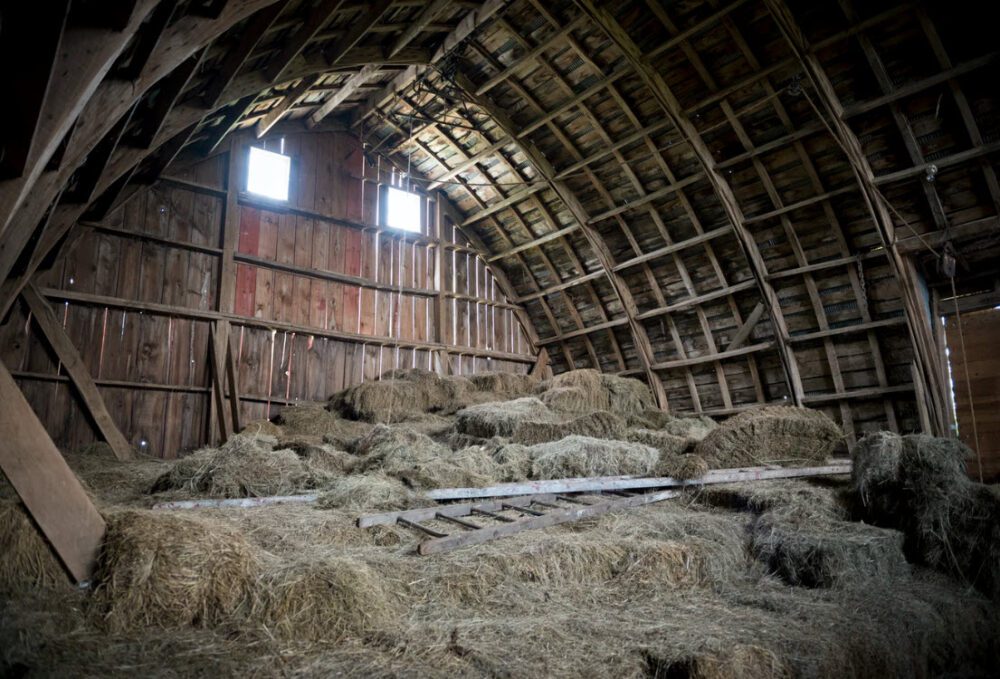
The hay in the barn analogy can be helpful to reflect on how big your barn is and how much hay you have. Do you have reserves for this event/challenge? Or did you do something epic recently and there are signs that your barn is empty or in disrepair (e.g. those feelings discussed above, signs of injury, illness or risky training load data, very low heart rate, etc.) The mid-season fatigue or burnout is commonly due to running out of hay. For a motivated athlete, it takes a lot of discipline and patience to train and recover properly for long term development.
In my opinion, most of us do not need to do massive rides to improve fitness. We can progress with frequent, quality sessions that have lower risk.
Other Factors (age, previous training, goals, lifestyle)
While TSS is nice it can leave out the difference in the athlete before the race and the intensity in which the race is performed. Elites are well conditioned for their event so they often are cooling down after events and doing easier training the next day. Many age-groupers are very fatigued at the finish and for days to weeks after events as their race day is so EPIC relative to their normal and their actual race day is much longer (time in the saddle, time in the sun, etc.). Age, daily ‘recovery’ environment (e.g. do you wake up for kids), and other factors can prolong recovery from EPIC events. Pros often have youth, a large fitness ‘base’, and schedules optimized for recovery on their side so they likely can and should take on more frequent events since it is their job and because they have the capacity to recover.
We need to be careful that we don’t take too many elite concepts and apply them to age-group/masters/regular people with jobs
Increasingly the concept of Energy Availability is an issue even at the pro ranks. The epic rides are awarded on social media but the risks for over-training/under-fueling are very large and it is only in the long-term that issues around body image, bone health, and general health are detected, often not linked back to excessive training loads.
Go Forth and Do Epic Things!
Embrace doing big things and pushing you limits, but make sure you have a few measures in place to help gauge your recovery and when in doubt, take some additional time to recover. You have time to do all the epic things you want but planning it into an annual and multi-year plan is the key to doing those epic things at your best level and with a lower risk of injury, illness, or burnout. We want you to keep riding for many years!
Not sure what your post-adventure recovery should look like?
Book a phone consult to discuss your training